



 EN
EN  VI
VI  CN
CN Blog
Escalating geopolitical risks in the Middle East have driven up acrylonitrile prices, boosted by cost factors


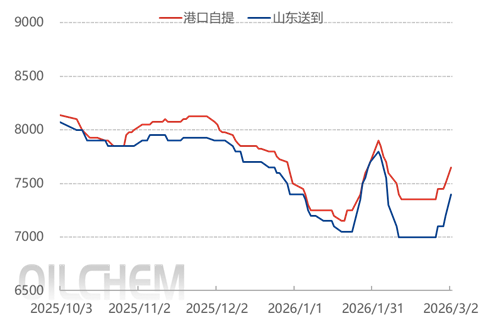
Introduction: After the Spring Festival, the domestic acrylonitrile market bottomed out and showed a slight rebound in some regions, mainly supported by cost factors. Recently, with escalating geopolitical risks in the Middle East, international crude oil and propylene prices have risen, further increasing cost pressure on acrylonitrile and thereby stimulating a broader price increase. Today, the overall market rose by around RMB 200/ton. In Shandong, major suppliers quoted spot prices at RMB 7,300/ton ex-works, while East China port prices also climbed to RMB 7,600–7,700/ton. Considering that some plant maintenance plans are expected to be implemented in the near term, the market is likely to maintain an upward trend in the short term.
I. Cost factors drive a rebound in acrylonitrile prices.
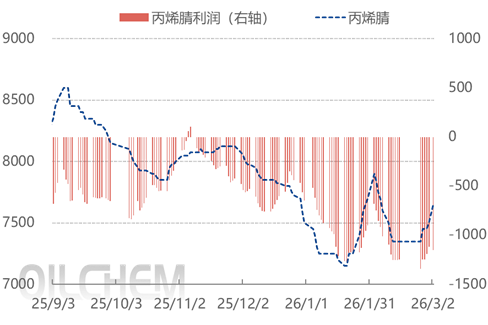
Since the fourth quarter of last year, losses in China’s acrylonitrile production have steadily expanded to over RMB 1,000 per ton, with no signs of improvement entering 2026. Prior to this latest rebound, acrylonitrile prices had fallen again to a historic low, dropping below RMB 7,000 per ton.
As losses have persisted, some plants have announced shutdowns or maintenance plans after the Spring Festival. For example, Fushun Petrochemical has already shut down, CNOOC Fudao plans to shut down for maintenance for about 25 days at the end of March, and Korur is scheduled for a major overhaul from April to June. Meanwhile, large producers such as Sirbon are still operating at low operating rates.
With post-holiday demand gradually recovering, the combined effect of tightening supply and rising cost pressures has provided strong support to the market.
China Acrylonitrile Industry Chain Price Comparison (Unit: RMB/ton)
| Product | Region | 2026/3/2 | 2026/2/28 | Change value | Change |
| propylene | Shandong | 6620 | 6410 | 210 | 3.28% |
| Synthetic Ammonia | Shandong | 2096 | 2096 | 0 | 0.00% |
| Acrylonitrile | East China Ports | 7650 | 7500 | 150 | 2.00% |
Data Source: Longzhong Information
Figure 1: Comparison of Mainstream Domestic Acrylonitrile Market Price Trends (2025–2026) (Unit: RMB/ton)
Data Source: Longzhong Information
Figure 2: Trend of Theoretical Production Profit for Acrylonitrile (2025–2026) (Unit: RMB/ton)
Data Source: Longzhong Information
II. Limited Short-Term Impact of Acrylonitrile Exports
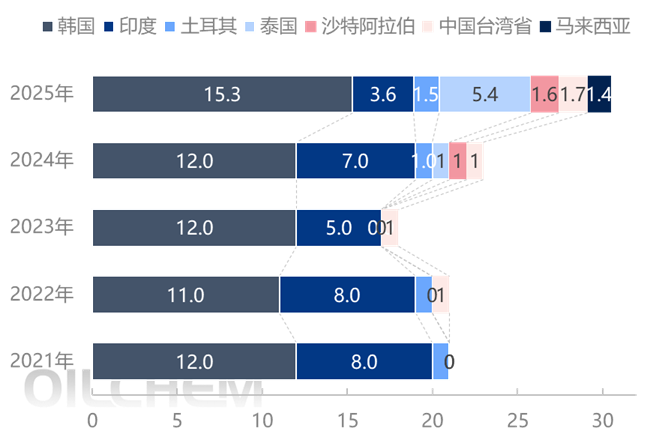
In recent years, China’s acrylonitrile exports have increased year by year, but trade with the Middle East remains relatively limited. In 2025, China exported a total of 311,000 tons of acrylonitrile, with an export dependency ratio of about 8.4%. Among this, exports to Saudi Arabia were approximately 16,000 tons, accounting for about 5.1%.
In the short term, the situation in the Middle East has a limited impact on the overall export landscape of acrylonitrile. However, in the longer term, factors such as rising freight costs may have a certain impact on export volumes to the Middle East and surrounding regions.
Figure 3: Comparison of China’s Acrylonitrile Export Volumes (2021–2025) by Destination (Unit: 10,000 tons)
Data Source: Longzhong Information
III. Supply Continues to Dominate the Long-Term Price Trend of Acrylonitrile
In the short term, fluctuations on the cost side are providing upward momentum to acrylonitrile prices, but this is still based on expectations of reduced supply in the coming period. As a chemical intermediate, the impact of cost pressures on acrylonitrile must translate into actual changes in production levels to have a fundamental effect on prices.
Looking ahead, the market is expected to have further room for upward movement. However, close attention should still be paid to changes in the supply-demand balance, as ongoing uncertainties on the supply side are likely to limit the extent of market fluctuations.