



 EN
EN  VI
VI  CN
CN Blog
Asia–Europe Freight Drop Fuels Polymer Export Surge

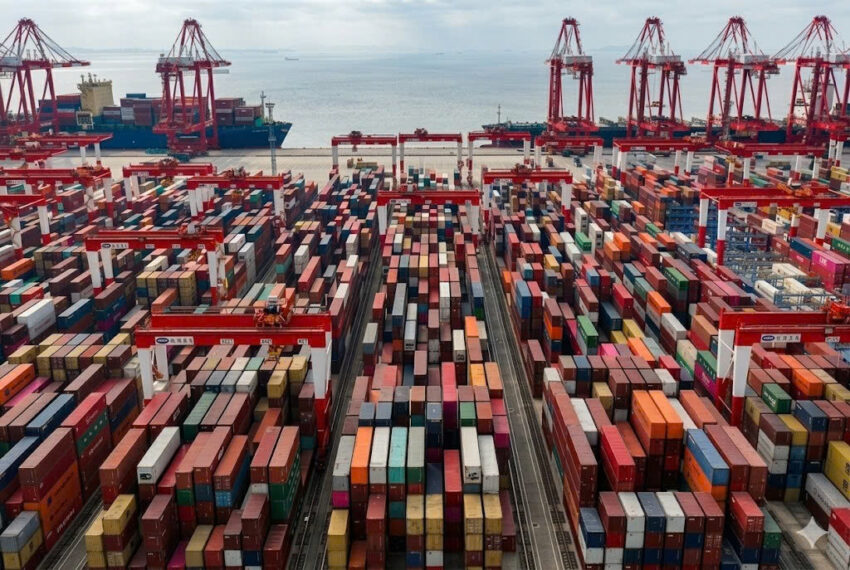
Container freight rates between Asia and Europe have weakened significantly during late April and early May 2026, largely erasing part of the geopolitical premium created earlier by Red Sea disruptions and Middle East tensions. The decline is now directly supporting renewed polymer arbitrage from China into Europe, especially for polypropylene (PP) and polyethylene (PE) cargoes.
According to the latest Freightos Baltic Index update published on May 5, 2026, Asia–North Europe container freight rates fell another 3% week-on-week, while Asia–Mediterranean rates remained mixed.
At the same time, Drewry World Container Index-related market data showed Shanghai–Rotterdam rates dropping to around USD 2,308/FEU during April 2026, down 9% week-on-week, while Shanghai–Genoa slipped to roughly USD 3,420/FEU.
The freight correction becomes more important when compared with conditions seen earlier during the Red Sea escalation period. During several peaks in late 2025 and early 2026, Asia–Europe freight costs temporarily surged above USD 5,000–6,000/FEU on some spot bookings due to vessel rerouting around the Cape of Good Hope, longer transit times, insurance surcharges, and container shortages. By early May 2026, rates had effectively normalized back toward the USD 2,300–3,400/FEU range, cutting logistics costs for Asian exporters substantially.
The Shanghai Containerized Freight Index (SCFI) also reflected this easing trend. SCFI stood around 1,890.77 points in mid-April 2026, showing volatility but remaining far below crisis-era highs.
For the polymer industry, this freight decline is highly significant because freight costs are a critical component in arbitrage economics between Asia and Europe. During the freight spike period, many Chinese PP and PE cargoes lost competitiveness into Europe despite lower resin prices, because logistics costs absorbed most pricing advantages. Now that freight rates have retreated sharply, Chinese-origin material is once again becoming commercially attractive.
This comes at a time when China’s domestic polymer market remains structurally oversupplied. Multiple new PP and PE production units started up across China during 2025–2026, while downstream demand recovery has remained inconsistent. Construction activity, export manufacturing, and consumer goods demand all continue to recover slower than many producers expected.
As a result, Chinese suppliers are aggressively seeking export outlets to relieve inventory pressure and maintain operating rates. Europe has emerged as one of the most important destinations because European polymer production economics remain weak.
European producers continue facing elevated energy costs, expensive labor, and environmental compliance burdens. Even though naphtha values softened somewhat during April 2026, many European steam crackers and downstream polymer facilities are still operating under compressed margins. Imported Asian material therefore becomes increasingly competitive whenever freight costs decline.
Polypropylene is currently the most exposed segment. Chinese homo-PP raffia and injection grades are being offered into Southern Europe and Eastern Europe at increasingly attractive net-back levels. Traders report that after including freight, duties, and handling costs, certain Chinese PP cargoes are undercutting regional European offers by EUR 80–150/ton in some transactions during late April and early May.
HDPE and LLDPE markets are showing similar developments, though arbitrage windows vary more by grade and destination. Lower freight costs are allowing traders to reopen short-term arbitrage opportunities that were previously closed during the freight spike period.
Another factor pressuring European markets is the broader weakness in regional demand. Many converters across Germany, Italy, and Central Europe continue buying cautiously due to uncertain manufacturing conditions and slow end-user recovery. This weak demand environment limits the ability of European producers to push through price increases, especially when cheaper imports re-enter the market.
Meanwhile, shipping markets themselves remain highly unstable despite recent freight declines. Industry reports continue warning that geopolitical risks around the Red Sea, Iran, and the Strait of Hormuz could quickly reverse current trends. Logistics analysts also note that carriers may attempt additional capacity management or blank sailings if spot rates continue weakening.
Still, as of early May 2026, the overall direction remains clear: falling Asia–Europe freight rates are restoring China’s export competitiveness in polymers and increasing pressure on European domestic resin markets.
If freight rates remain near current levels through Q2 and Q3 2026, Europe will likely see higher import volumes of Chinese PP and PE, further intensifying oversupply conditions and keeping downward pressure on regional polymer margins.